
Indian benchmark stock indices, Sensex and Nifty, closed nearly 1 per cent lower following the collapse of US-Iran negotiations, which heightened concerns of a prolonged conflict in West Asia and drove crude oil prices sharply higher.

Among Sensex stocks, Tata Motors Passenger Vehicles, Trent, Infosys, Power Grid, HDFC Bank, HCL Tech, Kotak Mahindra Bank, ICICI Bank and Bajaj Finance were the major laggards. However, Bharat Electronics, State Bank of India, Tata Steel, Eternal, Bharti Airtel and Reliance Industries were the gainers.

The no-equity partnership will develop a range of mid-capacity 250-750cc motorcycles.

Kerala has overtaken more industrialised states in personal electric vehicle adoption, driven by strong middle-class uptake, policy support, and charging infrastructure.

Bajaj Auto fears adverse impact on its exclusive loan deal with Bajaj Finance

The stock of automative major Eicher Motors hit its all-time high on Wednesday, capping the year with gains of about 52.7 per cent. It has comfortably outperformed its sector index, the Nifty Auto, which jumped 22.7 per cent, as well as the benchmark Nifty, which rose 10 per cent during this period.

Equity markets this week will turn their focus on the RBI's interest rate decision, Q1 earnings from several blue-chip firms and tariff-related news for further cues, analysts said. Moreover, trading activity of foreign investors and trends in global equity markets will also drive investors' sentiment.

Quarterly earnings, macroeconomic data announcements and global trends will drive the Indian stock markets in a holiday-shortened week, analysts said. Stock markets would remain closed on Wednesday for the Guru Nanak Gurpurab holiday.
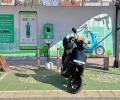
Electric two-wheeler (e2W) companies are upset with some of their suppliers of heavy rare-earth magnet-powered electric motors, who have objected to their proposal - under consideration by the government - that would allow e2W original equipment manufacturers (OEMs) an exemption from localisation norms on electric motors, thereby enabling them to continue receiving the 5,000-per-vehicle subsidy.V


Seven listed Tata companies together own 12.1 per cent in Tata Sons with a combined book value worth around Rs 30,700 crore.

Among Sensex firms, Mahindra & Mahindra, Asian Paints, Infosys, Titan, Sun Pharma, Tata Consultancy Services, Tech Mahindra and Power Grid were the major laggards. However, Bajaj Finance, Eternal, UltraTech Cement and Reliance Industries were among the gainers.
Bajaj Auto chairman Rahul Bajaj on Tuesday said his company could consider selling its holding in the Firodias-controlled Bajaj Tempo, now rechristened Force Motors.
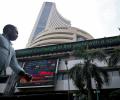
Benchmark stock indices Sensex and Nifty closed on a flat note in a choppy session on Wednesday as gains in PSU banks and auto shares were offset by losses in IT stocks.

Indian equity markets closed higher, driven by gains in PSU bank, auto, and financial stocks, following the US Supreme Court's decision on tariffs. Sensex climbed 479.95 points to 83,294.66, and Nifty advanced 141.75 points to 25,713.
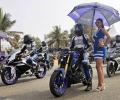
Major two-wheeler manufacturers in India witnessed a double-digit increase in domestic sales in October, driven by the festival fervour.

In 1989 when Bajaj came out with their legendary and elegant Hamara Bajaj campaign, that looked more at apna India, rather than the scooter, and at all hues of scootered Indians, it drew millions of eyeballs and was brilliantly successful.
Benchmark indices Sensex and Nifty experienced a significant decline, falling over 1 per cent due to foreign fund outflows and global uncertainties.

Indian stock market benchmarks Sensex and Nifty rebounded by over 1% on Monday, driven by value-buying in banking stocks after a three-day slump. Key gainers included UltraTech Cement, HDFC Bank, and Mahindra & Mahindra.

Among Sensex firms, State Bank of India, Bharat Electronics, Kotak Mahindra Bank, Maruti, Trent and UltraTech Cement were the major gainers. However, Bajaj Finserv, Titan, ITC and Tata Steel were among the laggards.

Rajiv Bajaj, the managing director of Bajaj Auto, on Thursday, reacted strongly to the threat by the company's trade union of going again on strike from April 28.
The Pune-based company pointed out that the Chinese manufacturer Taian Chiran Machinery Co and its Sri Lankan distributor were recently instructed by a Sri Lankan court to withdraw their copy of Bajaj Pulsar with DTSi technology from the market.
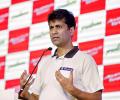
As a 75-year-old septuagenarian, Bajaj Auto has adapted itself as a nod to competition, regulations, and changing buyer preference. It will continue to do so, said its managing director Rajiv Bajaj at the launch of the all-new Pulsar 250. This was in response to a question on the company's preparedness for disruption by electric two-wheeler start-ups.
Now, sources in Bajaj Auto have confirmed that it is expected to offer a sneak preview of its small car, priced at roughly Rs 1.17 lakh, at the Expo. The country's second largest two-wheeler company had announced a tie-up with Renault and Nissan in October to develop an ultra-low cost small car for India.
Analysts tracking listed companies like Hero Honda, Bajaj Auto and TVS Motors have said sales forecast for the two-wheeler industry for the next few months looks very bleak as spiralling input costs, high lending rates and reducing availability of finance will put brakes on sales growth. ICICI Bank's has already withdrawn from advancing loans at two-wheeler dealerships.
Kawasaki Heavy Industries, a long time collaborator of Bajaj Auto, has announced that the company will launch high performance bikes by mid-2008.

Overall, volume growth is likely to be in the range of 3-8 per cent for two-wheelers and 5-7 per cent for passenger vehicles owing to healthy demand from urban and rural areas and pending order books.
Everything you wanted to know about the country's oldest two- and three-wheeler manufacturer and more.

Stock markets snapped the four-day falling streak on Tuesday with the benchmark Sensex rebounding by 317 points on buying in auto and pharma shares amid a decline in retail inflation to a more than six-year low, nearing the RBI's comfort zone. The 30-share BSE Sensex climbed 317.45 points or 0.39 per cent to settle at 82,570.91. During the day, it jumped 490.16 points or 0.59 per cent to 82,743.62. The 50-share NSE Nifty edged higher by 113.50 points or 0.45 per cent to 25,195.80.

Bajaj Auto, the king of the market for CNG-powered passenger three-wheelers, now wants to replicate this dominance in two-wheelers. The difference is that while the former is zooming - registrations for CNG-powered passenger three-wheelers nearly doubled during January-December 2023 - the latter, meaning a market for CNG-powered two-wheelers, does not exist.
Sources said Bajaj Auto would transfer over Rs 6,000 crore out of its surplus capital of Rs 8,000 crore to the new financial services entity to be used as its share capital.
A day before the settlement of the six-year-old Bajaj family dispute, the Bombay High Court has asked Rahul Bajaj, the family patriarch and chairman of Bajaj Auto, to compensate the Pittie family, a minority shareholder in group investment firm Bachhraj & Company.

Electric passenger vehicle (PV) retail sales jumped more than twofold in September with Tata Motors (TaMo) leading the pack having over 6,000 registrations and a 40 per cent market share.
The country's second largest two-wheeler manufacturer, Bajaj Auto, on Sunday said there was no case for any layoff in the company even though there has been a cut in production due to a slowdown in demand. According to the figures released by the Society of Indian Automobile Manufacturers, motorcycle sales in the country during October was down by 18.17 per cent at 5,38,353 units, against 6,57,874 units in the same month a year ago.
